






















Bizarre History (Part 1): Why Did Tombstones Sometimes Have Built-in Bells?
Today, grave accessories are mainly a matter of aesthetics, remembrance, and respectful landscaping. More than two hundred years ago, however, a tombstone could mean something entirely different — the last line of defense against one of the most horrifying fears of the 19th century: being buried alive.
Taphephobia: The Fear That Obsessed the 19th Century
At a time when medicine could not yet reliably confirm death, the fear of premature burial was entirely understandable. People in comas, deep fainting spells, or catalepsy could be mistaken for dead before it was truly too late.
This panic even had a name: taphephobia. And it was not limited to anonymous people. Among the best-known figures who feared it were Edgar Allan Poe and George Washington.
When the fear became strong enough, imaginative but terrifying solutions began to appear. One of the most notorious was the safety coffin.
The Invention of the Safety Coffin
In the 19th century, inventors competed to create a better way to survive underground. According to historical records, more than thirty different models of safety coffins were patented in Germany alone in the second half of the 19th century. [web:12]
One of the best-known patents was registered in 1868 by Franz Vester. His solution was surprisingly practical: the coffin had an air pipe, in some versions a ladder, and most importantly, a cord tied to the dead person’s hands.
The cord was led to the surface, where it was connected to a bell placed on the grave. If the buried person woke up and moved a hand, the bell would ring and alert the cemetery keeper. Safety coffins were created as a response to the fear of being buried alive.

When the Bell Rang on Its Own
The terrifying irony of these systems was that they were not always reliable. After death, natural processes can cause muscle contraction and involuntary body movements, which meant the bells sometimes rang for no real reason.
For cemetery keepers, this meant nighttime alarms, rushing toward the grave, and a few moments of pure horrifying doubt. In practice, the system was both brilliant and unreliable — and that is precisely why it is so fascinating today.

This is a printed patent drawing for a life-saving coffin invented by Christian H. Eisenbrandt in 1843.
The coffin had a spring-loaded lid that opened with “the slightest movement of the head or hand.” Source: National Archives of the United States
The Legend of “Saved by the Bell”
The story of safety coffins also gave rise to the popular myth that the English expression “saved by the bell” comes from cemetery bells. It is a perfect urban legend because it fits the terrifying atmosphere of the 19th century so well.
However, most modern etymologists believe the phrase most likely comes from boxing, where the bell at the end of a round saves a fighter from further punishment. Even so, the cemetery version remains stronger, more cinematic, and therefore much more memorable.
From Fear to Aesthetics
Today, such accessories are a thing of the past. Instead of pipes, cords, and alarm bells, graves are marked by durable, aesthetic, and respectful elements that emphasize peace and remembrance.
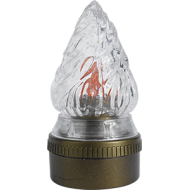
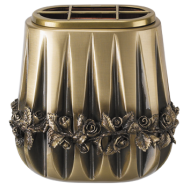
Modern grave design is dominated by grave lights, lanterns, and minimalist vases. Their role is no longer to call for help, but to symbolize eternal respect, order, and dignity.
Cemeteries Through Time
Cemetery culture changes over the centuries together with society, its fears, and its relationship with death. From a grave bell that may have saved a life to the modern, aesthetically arranged tombstone, a long road has been traveled.
If you are interested in how bizarre and fascinating cemeteries around the world can be, read our article about unusual cemeteries of the world, or discover how some of them became true tourist attractions in the article about the 10 most beautiful cemeteries in the world.
And what will the future look like? Find out why many believe that memorial parks are the cemeteries of the future. For renovation and aesthetic arrangement of graves with modern and durable accessories, visit our offer at vecnispomin.si.
An Even More Terrifying Example
One of the best-known examples of fear of being buried alive was not a safety coffin, but a grave with a window in New Haven, Connecticut. Dr. Timothy Clark Smith, who died in 1893, was so afraid of premature burial that he had an underground tomb built with a window, a hammer, and a chisel beside the body.
The window allowed cemetery workers and passersby to look inside and check whether he had perhaps returned from the dead. So far, there are no signs that this has happened.
Frequently Asked Questions
What is taphephobia?
Taphephobia is a panic fear of being mistakenly buried alive.
How did a safety coffin work?
A safety coffin had an air pipe, a cord leading to the surface, and a bell that would alert the keeper if the buried person woke up.
Does the expression “saved by the bell” come from cemeteries?
Most likely not. The most widely accepted explanation connects it to boxing, not graves.
Leave a Comment